Is It Okay to Do Toasts at an LDS Wedding Reception?
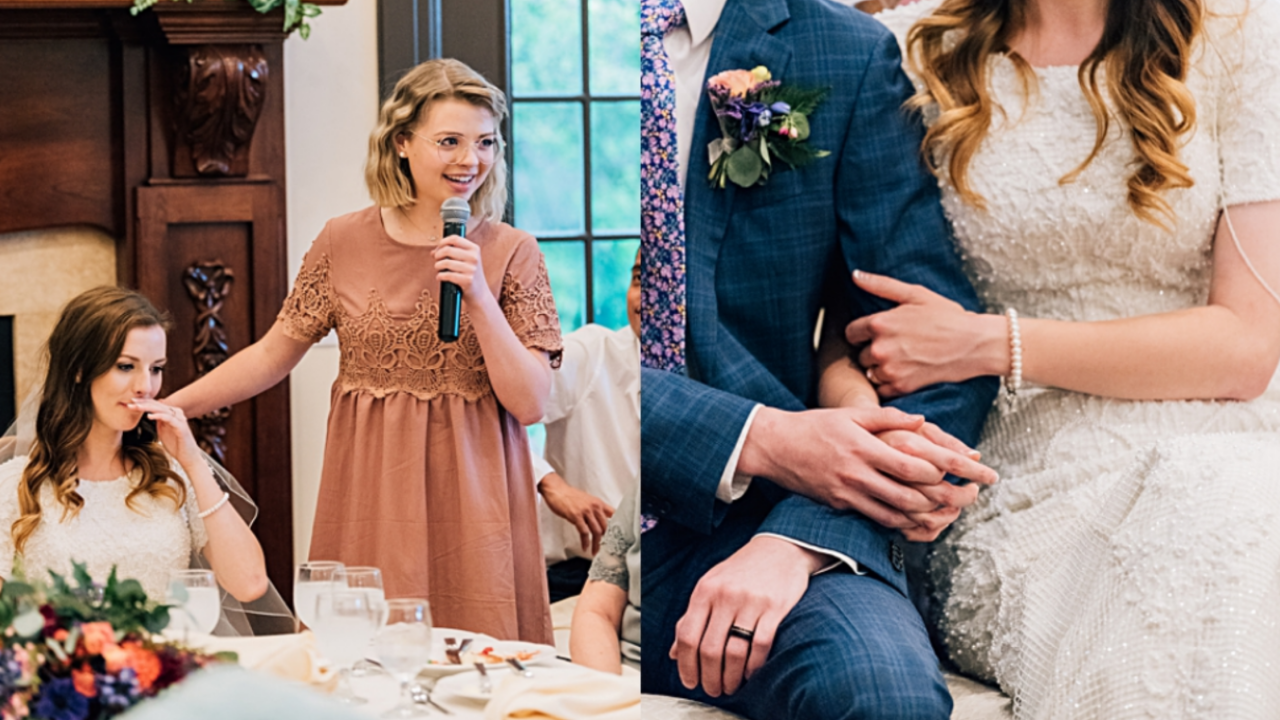
Image Courtesy of Kylee Ann Photography
The tradition of raising a glass and offering a toast to the newlyweds has been around for thousands of years.
It’s one of those moments we often picture—laughter, heartfelt words, and loved ones celebrating the beginning of a new life together.
But if you’re planning a Latter-day Saint wedding reception, you might find yourself wondering:
Is it okay to include a toast at all?
And more specifically…
Is it okay if it’s non-alcoholic?
Let’s walk through this together.
The Heart Behind the Tradition
At its core, a wedding toast isn’t really about the drink.
It’s about the words.
It’s about someone standing up—often a parent, sibling, or close friend—and expressing love, encouragement, and heartfelt wishes for your marriage.
That part?
That’s beautiful. And completely in harmony with the spirit of an LDS wedding celebration.
The Case for Non-Alcoholic Toasts
Some couples feel perfectly comfortable including a toast—as long as it aligns with the Word of Wisdom.
In these cases, you might see:
- Sparkling cider
- Non-alcoholic champagne
- Juice
- Even simple water
For many LDS brides and grooms, this feels like a natural way to honor tradition while still staying true to their values.
After all, the focus isn’t the beverage—it’s the blessing being spoken.
Why Some Couples Choose Not To
On the other hand, some couples feel a little hesitation.
They may reflect on scriptures like:
“Abstain from all appearance of evil.” — 1 Thessalonians 5:22
For them, even a non-alcoholic toast can feel a little too close to a tradition they’d prefer to avoid.
They may also consider:
- How it might be perceived by guests
- Whether it could make others uncomfortable
- Their own personal feelings about the symbolism
And those are valid considerations too.
A Beautiful Middle Ground
If you find yourself somewhere in between, you’re not alone.
Many couples choose to keep the speeches—but simply skip the raised glass altogether.
This allows for:
- Meaningful words
- Emotional connection
- A joyful, uplifting moment
…without any concern about how it might be interpreted.
What Does the Church Say?
The Church does not give official guidance on whether or not to include a non-alcoholic toast at a wedding reception.
Which means this becomes a personal decision.
One that you make together.
What Matters Most
As you talk through this with your fiancé, ask yourselves:
- What feels right for us?
- What reflects our values?
- What will create the kind of atmosphere we want at our reception?
And then…
Move forward with peace.
Because there isn’t a single “correct” answer here—only the one that feels right for your marriage.
A Gentle Reminder
Your wedding reception doesn’t need to follow every tradition.
It doesn’t need to look like anyone else’s.
It simply needs to feel like a celebration of your love, your faith, and the life you’re beginning together.
Whether you include a toast… skip it… or create your own version of the moment—
It will be beautiful because it’s yours.

Unlock Your
Dream
Church of Jesus Christ Wedding:
Divine, Affordable, and Unforgettable
Ready to plan a wedding that reflects your faith, your style, and your values?
I created the Church of Jesus Christ Wedding Planner to support LDS brides who, like you, want a wedding day that’s both beautiful and sacred. Whether you’re looking for meaningful decor ideas or practical planning help, I’m here to guide you every step of the way—with resources designed just for Latter-day Saint brides. You don’t have to figure this out alone. Let’s make your wedding day as joyful and unforgettable as the covenant you’re preparing to make.
Your faith. Your love. Your day. Let's make it beautifully yours.
Disclaimers: While I am honored to be a member of The Church of Jesus Christ of Latter-Day Saints, please note that this site is not an official site of The Church of Jesus Christ of Latter-Day Saints. And while I strive to live by the doctrine of the church, the views, content, and resources provided here are solely my own and do not represent official doctrine or policy of The Church of Jesus Christ of Latter-Day Saints.