LDS Ring Ceremony

A Meaningful Way to Include Loved Ones
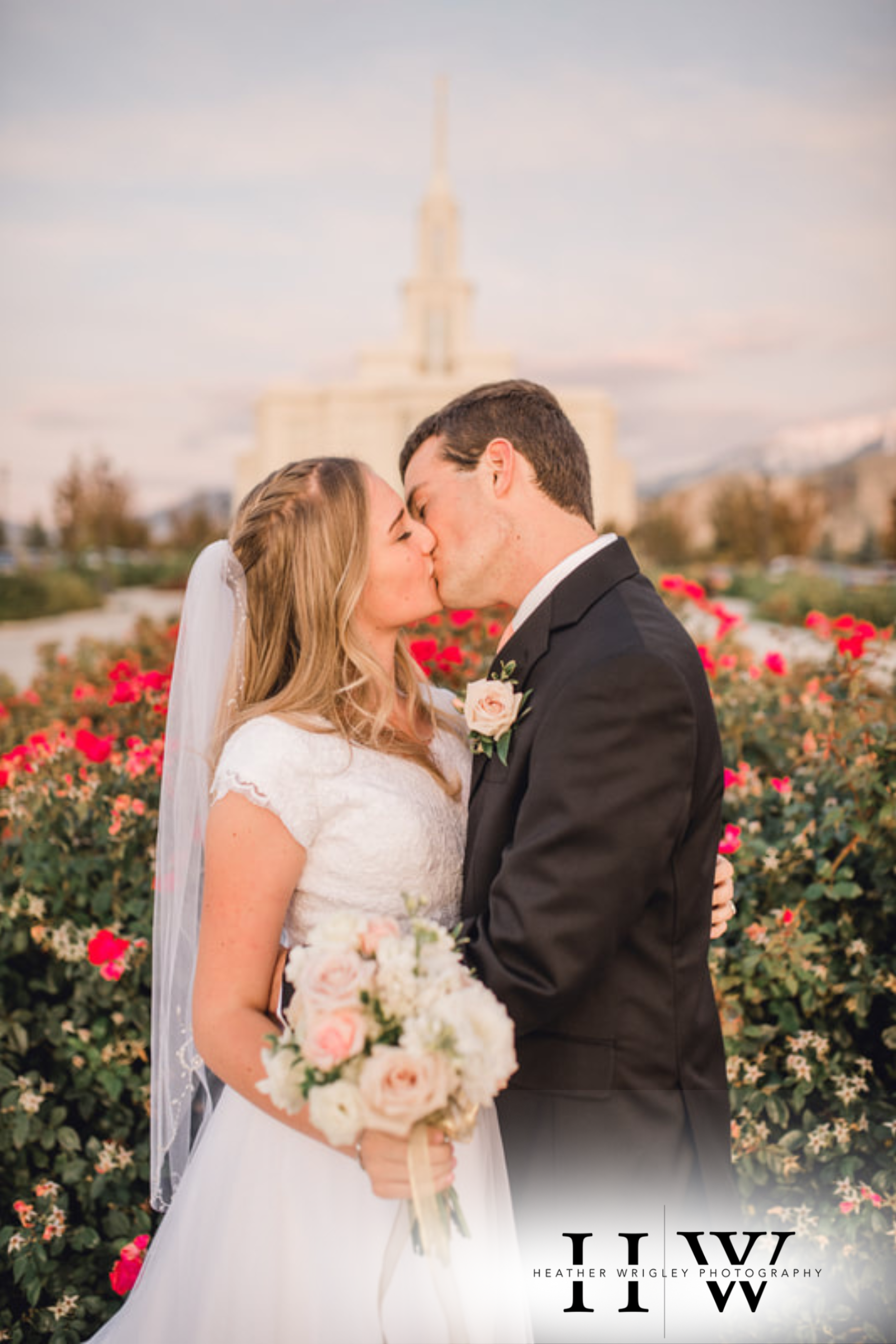
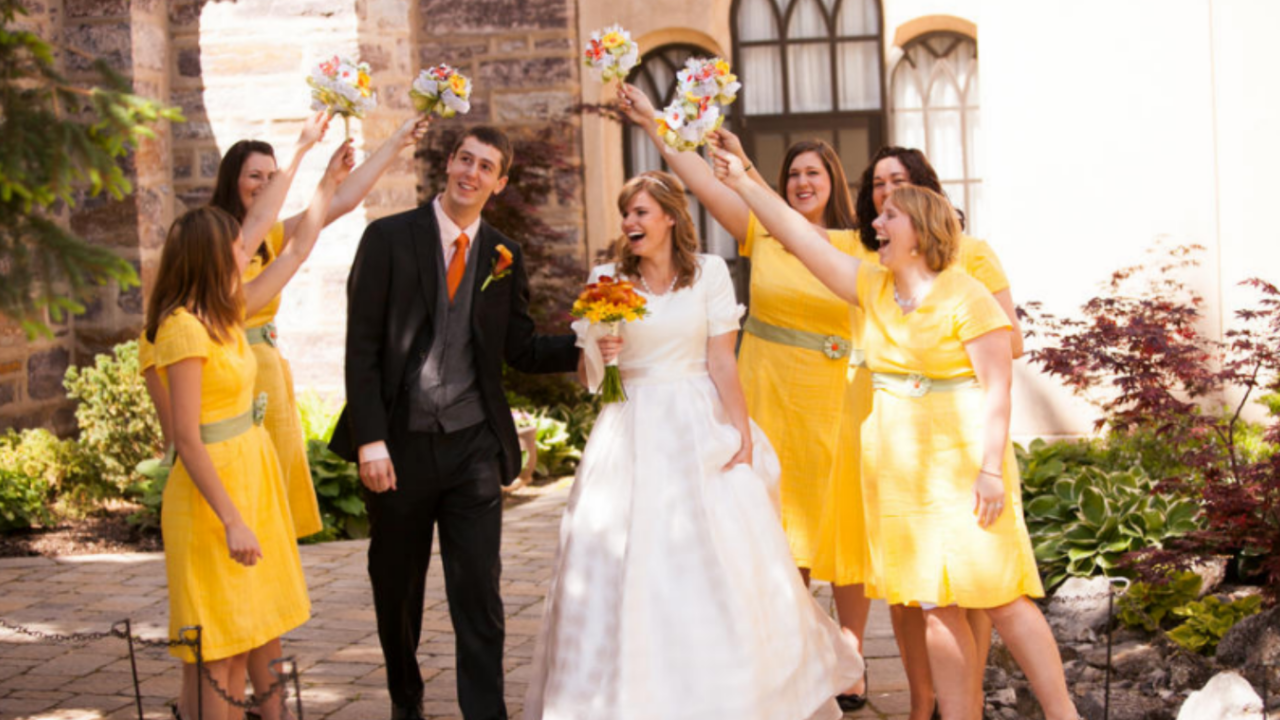
Image Courtesy of Heather Wrigley Photography
For Latter-day Saint couples who are sealed in the temple, exchanging rings is not part of the sealing ordinance. But rings are a meaningful symbol for many couples, and sometimes exchanging them in front of family and friends can become a beautiful way to include people who were unable to attend the temple sealing.
That is where an LDS ring ceremony can be especially meaningful.
Some couples exchange their rings immediately after their sealing in the sealing room. Others choose to exchange them later, perhaps just before or during their wedding reception, so family and friends can share the moment with them. Both possibilities are addressed in the Church's current General Handbook.
If you choose to have a separate ring ceremony, it doesn't need to become a second wedding. In fact, its simplicity can be part of what makes it so beautiful. It can be a short, reverent celebration of the eternal commitment you have already made while giving the people who love you an opportunity to gather around you and share in your happiness.
Why Have an LDS Ring Ceremony?
For some couples, nearly everyone they love will be able to attend their temple sealing. For others, that simply isn't the case.
A parent, sibling, grandparent or close friend may not be able to attend the sealing. Some couples come from part-member families. Others have relatives and friends of different faiths. There can also be people you dearly love who are members of the Church but aren't able to attend the temple with you.
The Church specifically allows couples who are married and sealed in the same ceremony to exchange rings later to accommodate family members who were unable to attend the temple sealing.
That makes the ring ceremony something more than another item on the wedding schedule. It can say to the people you love, “We wanted you to be part of this day, too.”
The rings themselves don't replace or add to the covenants you made in the temple. They are symbols. But symbols can carry tremendous meaning, particularly for a mother, father, grandparent, sibling or friend who wasn't able to be with you during the sealing.
Can You Exchange Rings at the Temple?
Yes—and this is an important clarification because Church guidance has changed over the years.
The current General Handbook explains that exchanging rings is not part of the temple sealing ceremony, but a couple may exchange rings after the sealing ceremony in the sealing room. Rings should not be exchanged at another time or location inside the temple or elsewhere on temple grounds.
That means you have choices.
You may decide that exchanging rings quietly in the sealing room immediately after your sealing is exactly what you want. Or, if there are loved ones who couldn't attend the sealing, you may decide that you would rather save the ring exchange for a separate gathering where they can participate in the moment.
Couples who were married civilly before their temple sealing have another option: according to the current Handbook, they may exchange rings at the civil ceremony, at their temple sealing, or at both.
The important distinction is that the ring exchange and the sealing are not the same thing. Your eternal marriage covenant is made in the temple.
What Should an LDS Ring Ceremony Be Like?
There isn't one required LDS ring-ceremony program.
Your ceremony might be ten minutes long. It might include a beautiful musical number. Someone might share a few thoughts about eternal marriage. Parents or other loved ones might offer brief remarks. You and your sweetheart might share what you love and appreciate about one another before exchanging your rings.
What matters more than the exact program is the spirit of the occasion.
The Church's current guidance says that a later ring exchange should be consistent with the dignity of the temple sealing and should not replicate any portion of the sealing ceremony. Couples who have already been sealed should also not exchange vows during the later ring exchange.
So think of your ring ceremony as a celebration of the marriage that has already taken place—not another marriage ceremony.
That distinction can actually make planning much easier.
You aren't trying to recreate what happened in the temple. You're simply creating a lovely moment for the people who couldn't be there.
A Simple LDS Ring Ceremony Program
Your ring ceremony doesn't need an elaborate script or a long list of participants. In many cases, shorter is better, particularly when the ceremony leads directly into your reception.
A simple program might include:
- Opening prayer offered by a parent, family member or friend
- Welcome and brief explanation of the temple sealing for guests who may be unfamiliar with it
- Special musical number, if desired
- Short remarks about eternal marriage or the couple
- Bride shares her feelings for the groom
- Groom shares his feelings for the bride
- Exchange of rings
- Closing prayer
That's enough.
You don't need to create another entire wedding ceremony around the exchange of two rings. The sealing has already happened. The ring ceremony is simply an opportunity to share your happiness and your love with the people gathered around you.
And if three or four elements feel more like you than eight, use three or four.
What Can You Say Instead of Wedding Vows?
This is where some couples get confused.
The Church's current guidance is clear that a couple should not exchange vows after being sealed in the temple.
But that doesn't mean you have to stand silently, hand each other rings and walk away.
You can share your feelings.
You might tell your husband what you love about him. You might tell your wife how grateful you are that she chose you. You could share a favorite memory from your relationship, something you've learned from one another, or how you feel about beginning your life together.
There is an important difference between saying, “I love the way you make everyone around you feel important, and I'm so grateful that I get to spend my life with you,” and creating a new set of wedding vows beginning with, “I promise...”
Keep the focus on love, gratitude and the commitment you have already made.
And yes, we're going to explore this subject much more deeply in another article, because once couples decide to have a ring ceremony, one of the next questions is inevitably:
“Okay...so what do we actually say?”
Should You Explain the Temple Sealing to Your Guests?
If several guests aren't familiar with Latter-day Saint temple marriage, a brief explanation can be one of the most meaningful parts of your ring ceremony.
It doesn't need to become a sermon, and it certainly doesn't need to include sacred details about the temple ceremony.
Someone might simply explain that earlier that day the bride and groom were sealed in the temple and that Latter-day Saints believe husbands and wives can be joined for time and all eternity. The Church describes the sealing as joining a husband and wife for time and all eternity as they make covenants with God and with each other.
That gives your guests enough context to understand what they're witnessing now: the rings are symbols of an eternal commitment that has already been made.
For someone who loves you but couldn't be inside the temple, that explanation can make the ring exchange much more meaningful.
Who Should Lead Your Ring Ceremony?
Because the later ring exchange is not another marriage or temple ordinance, it doesn't need to look like a traditional wedding ceremony with an officiant performing a marriage.
You might ask a bishop, parent, grandparent, sibling, close friend or another person who knows and loves you to guide everyone through the short program.
Choose someone who understands what you want the ceremony to be and, equally important, what you don't want it to become.
Talk with that person beforehand. Explain that you've already been sealed and that the purpose of this gathering is to celebrate that marriage and include your loved ones—not recreate the marriage ceremony.
That little conversation beforehand can prevent someone from innocently launching into, “Dearly beloved, we are gathered here today...” while you stand there thinking, Nooooo, we already did this part.
When Should You Hold the Ring Ceremony?
For many couples, immediately before the reception works beautifully.
Guests can arrive a little earlier, take their seats, participate in the ring ceremony, and then move naturally into the reception. You don't have to gather everyone twice, and you don't create another complicated event on an already busy day.
Other couples incorporate the ring exchange into the early portion of their reception.
There isn't one perfect timeline. Think about your venue, your photography schedule, how many guests will attend and how the ring ceremony fits with the rest of your day.
Most importantly, don't let a simple ten- or fifteen-minute ceremony turn into another major production you have to manage.
Your wedding day already has enough moving pieces.
Can You Have a Processional?
A simple entrance or processional can be a lovely way to begin your ring ceremony, particularly if family members who couldn't attend the sealing have been looking forward to seeing you enter together.
Just remember the purpose of the occasion.
You don't need to recreate an entire traditional wedding ceremony in order to make the entrance special. Beautiful music, your family gathered together and the sight of the two of you walking into the room may be all you need.
The goal isn't to make the ring ceremony look as much like another wedding as possible.
The goal is to make the people you love feel included in the wedding day you are already celebrating.
What About a Civil Wedding Before the Temple Sealing?
This is another area where current Church policy is different from what many Latter-day Saint parents and grandparents remember.
Today, a man and woman who marry civilly may be sealed in the temple as soon as circumstances permit, provided they meet the Church's requirements for the sealing. The former waiting period after a civil marriage is no longer the general rule.
For some couples, particularly those with many family members who cannot attend the temple, that may affect the way they plan their wedding day.
A couple might choose a civil marriage where everyone can attend and then be sealed in the temple. Another couple may choose the temple sealing followed by a ring ceremony. Still another may exchange rings quietly in the sealing room.
These are different ways couples may structure the day within current Church guidelines. What matters is understanding the difference between the civil marriage, the temple sealing and a later symbolic ring exchange so that your guests understand it too.
How Can You Include Family Members Who Couldn't Attend the Sealing?
This is where a ring ceremony can become especially tender.
Ask a parent to offer the prayer. Invite a sibling to sing or play a musical number. Let a grandparent share a few words. Have your parents sit where they can clearly see you exchange your rings.
You don't need to give everyone a job. Sometimes simply making sure the people who couldn't attend the sealing have a place of honor at the ring ceremony says enough.
For part-member families in particular, approach this with love rather than defensiveness. Your ring ceremony doesn't need to explain why someone wasn't in the temple or draw attention to anyone's circumstances.
It can simply say:
We're so glad you're here. We love you. We wanted to share this moment with you.
Sometimes that's exactly what a family needs.
Keep Your Ring Ceremony Focused on What Matters
It is very easy for weddings to grow.
A simple idea becomes a program. The program becomes decorations. The decorations need flowers. Someone decides you need another aisle. Then chairs need bows. Now you apparently need another rehearsal.
Stop.
Your ring ceremony doesn't need to become another wedding to be meaningful.
Keep the focus on your temple sealing, your love for one another, your faith in Jesus Christ, and the family and friends who have gathered to celebrate with you.
The beauty of the ring ceremony isn't how elaborate you make it.
It's that people who couldn't share one sacred part of your wedding day are being lovingly included in another.
Plan Your LDS Ring Ceremony
If you've decided that a ring ceremony is right for you, our LDS Ring Ceremony Checklist can help you organize the details, choose the people you'd like to involve, and create a simple plan for the ceremony.
The checklist is there to make this easier—not turn it into one more enormous wedding project.
Because ultimately, the ring is a symbol.
The temple sealing is the covenant.
And your ring ceremony is simply one beautiful way of gathering the people you love around you and saying, “Come celebrate with us.”
That really can mean the world to someone who loves you.

Plan
Without the Overwhelm.
You don’t have to figure out every wedding detail at once. I created the Wedding Planning Studio to bring practical guidance, creative ideas, and useful planning tools together—with Latter-day Saint brides and families in mind.
Explore 21 wedding planning books, 12 apps, and bonus checklists for $20. Find help with budgeting, comparing vendors, planning food quantities, organizing your timeline, and discovering the questions you didn’t know you needed to ask.
Use what helps with the decision in front of you, and return whenever you need another resource.
Inspiration. Knowledge. Planning.
This is an independent resource created by a member of The Church of Jesus Christ of Latter-day Saints. It is not affiliated with or endorsed by the Church. For temple requirements, ordinances, and Church policies, please consult official Church resources or your temple